

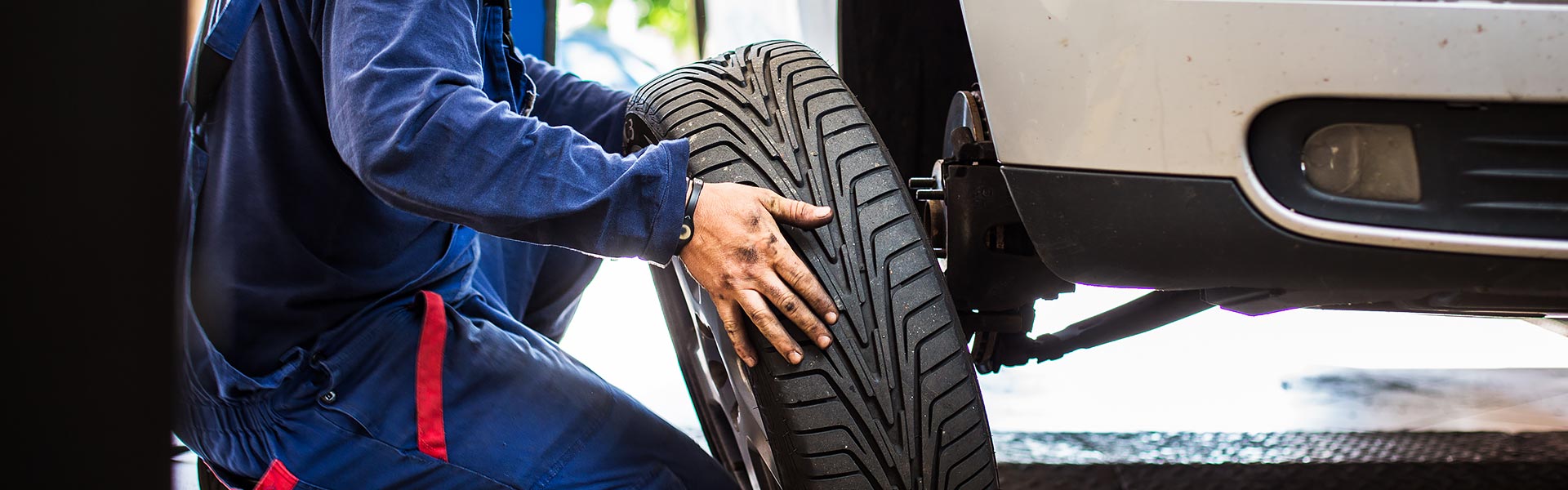
Tires don’t wear randomly. Every mile you drive leaves clues about how your vehicle is performing, and the tread pattern can reveal problems long before a warning light appears on the dashboard. If one tire is wearing faster than the others or the tread looks uneven, it’s usually a sign that something else on the vehicle needs attention. Understanding those patterns can help you correct small issues before they shorten tire life or affect handling.
Center Wear vs. Edge Wear
The simplest wear patterns are often caused by tire pressure. If the center of the tread wears faster than the edges, the tire has likely spent too much time overinflated. Because the center of the tire carries more of the load, it wears away first.
If both outer shoulders wear more quickly than the center, the opposite is usually true. Underinflated tires flex more as they roll, placing additional weight on the outer edges while increasing rolling resistance and heat buildup. Checking tire pressure regularly is one of the easiest ways to maximize tread life.
One-Sided Wear Usually Points to Alignment
When only the inside or outside edge of a tire wears rapidly, wheel alignment is often the culprit. Even slight changes in camber or toe angles can cause the tire to scrub against the pavement instead of rolling evenly. You may also notice the steering wheel sitting off-center or the vehicle drifting to one side on a straight road. A professional wheel alignment restores the wheels to factory specifications, helping improve tire life, handling, and fuel efficiency.
Cupping Can Mean Suspension Problems
A scalloped or cupped tread pattern often indicates the tire is bouncing instead of maintaining consistent contact with the road. Worn shocks, struts, or other suspension components are common causes. Instead of absorbing bumps smoothly, the suspension allows the tire to repeatedly strike the pavement, creating alternating high and low spots across the tread. Drivers often notice increased road noise or steering wheel vibration along with this type of wear.
Uneven Wear Across Multiple Tires
If several tires show irregular wear, overdue tire rotations may be part of the problem. Front and rear tires experience different loads, steering forces, and braking demands. Rotating them at the recommended intervals helps distribute wear more evenly and extends the life of the entire set.
During a tire inspection, technicians also evaluate tread depth, inflation pressure, suspension components, and alignment to determine whether additional repairs are needed.
Don’t Ignore What Your Tires Are Telling You
Uneven tire wear rarely fixes itself. Left untreated, it can reduce traction, increase stopping distances, create vibration, and force premature tire replacement. If you’ve noticed unusual tread wear, steering pull, vibration, or increased road noise, scheduling an inspection now can often prevent more expensive repairs later.
Schedule Tire Service at Kia of Everett
Your tires provide valuable insight into your vehicle’s overall health. The service team at Kia of Everett can inspect tread wear, check tire pressure, perform wheel alignments, evaluate suspension components, and recommend the right maintenance to help maximize tire life. Schedule your next tire inspection and keep your Kia driving the way it was engineered to.


 Warranties include 10-year/100,000-mile powertrain and 5-year/60,000-mile basic. All warranties and roadside assistance are limited. See retailer for warranty details.