
Today: 8:30AM - 8:00PM
Blog / Center Wear vs. Edge Wear

Your Tires Are Talking: What Different Wear Patterns Mean for Your Kia

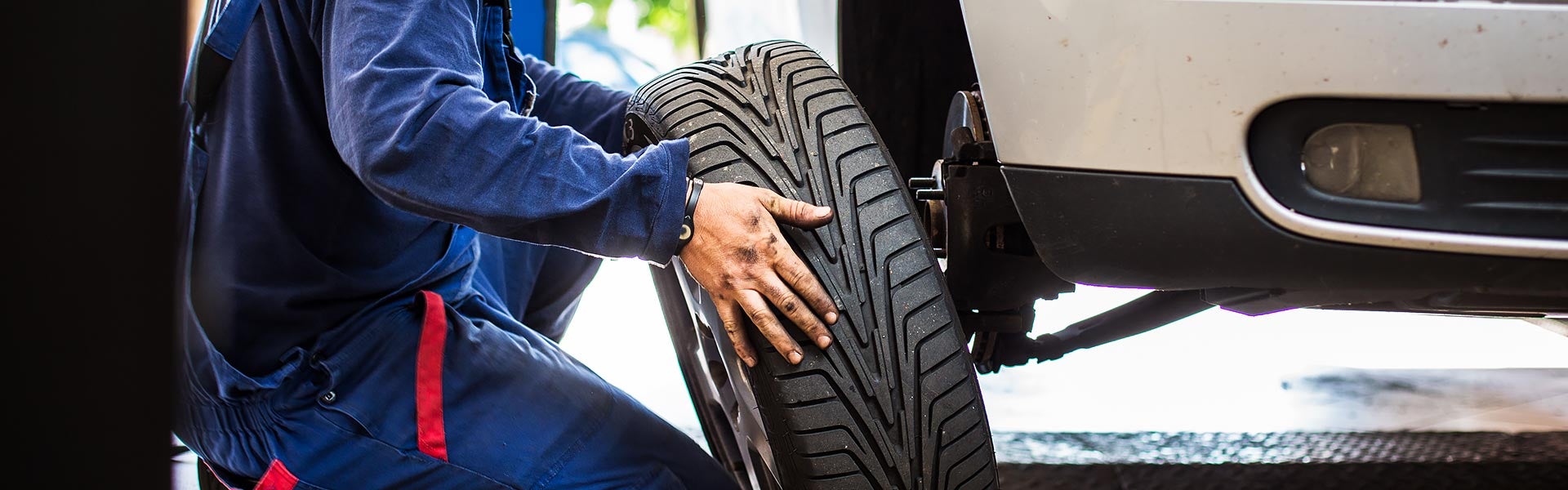
Mechanic mounting a tire onto a white vehicle.

Tires don't wear randomly. Every mile you drive leaves clues about how your vehicle is performing, and the tread pattern can reveal problems long before a warning light appears on the dashboard. If one tire is wearing faster than the others or the tread looks uneven, it's usually a sign that something else on the vehicle needs attention. Understanding those patterns can help you correct small issues before they shorten tire life or affect handling. 

Center Wear vs. Edge Wear 

The simplest wear patterns are often caused by tire pressure. If the center of the tread wears faster than the edges, the tire has likely spent too much time overinflated. Because the center of the tire carries more of the load, it wears away first. 

If both outer shoulders wear more quickly than the center, the opposite is usually true. Underinflated tires flex more as they roll, placing additional weight on the outer edges while increasing rolling resistance and heat buildup. Checking tire pressure regularly is one of the easiest ways to maximize tread life. 

One-Sided Wear Usually Points to Alignment 

When only the inside or outside edge of a tire wears rapidly, wheel alignment is often the culprit. Even slight changes in camber or toe angles can cause the tire to scrub against the pavement instead of rolling evenly. You may also notice the steering wheel sitting off-center or the vehicle drifting to one side on a straight road. A professional wheel alignment restores the wheels to factory specifications, helping improve tire life, handling, and fuel efficiency. 

Cupping Can Mean Suspension Problems 

A scalloped or cupped tread pattern often indicates the tire is bouncing instead of maintaining consistent contact with the road. Worn shocks, struts, or other suspension components are common causes. Instead of absorbing bumps smoothly, the suspension allows the tire to repeatedly strike the pavement, creating alternating high and low spots across the tread. Drivers often notice increased road noise or steering wheel vibration along with this type of wear. 

Uneven Wear Across Multiple Tires 

If several tires show irregular wear, overdue tire rotations may be part of the problem. Front and rear tires experience different loads, steering forces, and braking demands. Rotating them at the recommended intervals helps distribute wear more evenly and extends the life of the entire set. 

During a tire inspection, technicians also evaluate tread depth, inflation pressure, suspension components, and alignment to determine whether additional repairs are needed. 

Don't Ignore What Your Tires Are Telling You 

Uneven tire wear rarely fixes itself. Left untreated, it can reduce traction, increase stopping distances, create vibration, and force premature tire replacement. If you've noticed unusual tread wear, steering pull, vibration, or increased road noise, scheduling an inspection now can often prevent more expensive repairs later. 

Schedule Tire Service at Kia of Everett 

Your tires provide valuable insight into your vehicle's overall health. The service team at Kia of Everett can inspect tread wear, check tire pressure, perform wheel alignments, evaluate suspension components, and recommend the right maintenance to help maximize tire life. Schedule your next tire inspection and keep your Kia driving the way it was engineered to.
Posted in:

Related Posts

2026 Kia EV9

Kia EV9 or Telluride: Which Three-Row SUV Fits Your Routine?

The Kia EV9 and gas-powered Telluride can both carry a family across three rows. The bigger difference is what happens between drives. One can recharge while you are home; the other needs occasional gas stops. Which routine feels easier depends on where you park, how far you travel, and how often you fill every seat. What would a normal week look like? If you can charge at home, the EV9 may fit neatly into your weekday schedule. You could plug in after work and start the next morning with the charge you need for school, errands, and commuting. A Level 2 setup is particularly useful if you drive more miles each day. Before choosing the EV9, check whether your home’s parking and electrical setup can support the charging plan you want. The Telluride does not require a home charging setup. You can fill the tank during an existing errand and otherwise drive as you normally would. That may be simpler if you park on the street, cannot install charging equipment, or regularly share a vehicle between drivers with different schedules. How do your longer drives work? A longer EV9 trip calls for a charging plan. Look at the route you actually take, including where your family usually stops for meals or breaks. Check whether charging is available at those stops and allow for changing conditions: highway speed, weather, passengers, and cargo can affect how far the EV9 travels between charges. In the Telluride, a fuel stop usually takes less planning. That flexibility may matter if your trips often change at the last minute or take you away from well-served charging routes. On the other hand, a family that already stops for a meal on a long drive may find that a planned EV9 charging break fits its routine. Will the seats and luggage fit together? Try each SUV with the number of passengers you normally carry. EV9 and Telluride seating layouts vary by trim, so check whether the vehicle has a second-row bench or captain’s chairs. Have the people who will ride in the third row climb in and adjust their seats. If you use child seats, bring them along to see how their placement affects access. Keep the third row upright when you check cargo space. Load the stroller, sports bags, suitcases, or other gear that travels with your family. Published cargo volume cannot tell you whether your particular items fit comfortably or whether everyone can still use their seats. Which routine would you rather keep? The EV9 makes the strongest case when home charging is practical and most driving happens within a predictable weekly pattern. The gas Telluride may feel easier if you want quick fuel stops and frequently take trips that would require charging plans. Either way, test the seating and cargo arrangement before deciding. The vehicle that handles your busiest ordinary day is likely to be the one you appreciate most.

Kia Carnival Hybrid

Carnival Hybrid or Sorento Hybrid: Which Makes Family Loading Easier?

The difference between a sliding door and an SUV door becomes clear when you are loading a child into a car seat in a crowded parking lot. The Kia Carnival Hybrid and Sorento Hybrid both offer three rows, but they handle that daily task differently. For this Kia three-row hybrid comparison, start with your usual passengers and everything they bring along. Which doors work better in your parking spot? The Carnival Hybrid’s power sliding doors open along the vehicle instead of swinging outward. That can make it easier to reach the second row when another car is parked close by. Try opening both sides, helping a child inside, and loading a bag while the door is open. The Sorento Hybrid has conventional rear doors. Check how far you need to open one to lift a child into a seat or help a passenger out. If you park in a narrow garage or frequently use tight school pickup spaces, this simple test may tell you more than an exterior measurement. How will everyone reach the third row? In the Carnival Hybrid, check the path past the second-row seats with your family’s preferred seating arrangement. In the Sorento Hybrid, try moving the second row forward, then have the people who will actually ride in back climb in and out. Available second-row captain’s chairs can change that experience. Do the test with the front and second rows adjusted for their regular passengers. A route to the third row may feel easy in an empty vehicle but less convenient once everyone’s seats are in place. Where will the car seats go? Bring the car seats you use most often. Check how each one fits in your preferred position, whether the front passenger still has enough room, and how an installed seat affects access to the third row. If you need more than one car seat, test the full arrangement together. Before settling on a position, confirm the permitted installation method and anchor locations in the vehicle owner’s manual and the car-seat instructions. An installed child seat should stay properly secured while other passengers get in and out. What fits when every seat is occupied? This is a substantial difference. For the 2026 models, Kia lists 40.2 cubic feet of cargo space behind the Carnival Hybrid’s third row and 12.6 cubic feet behind the Sorento Hybrid’s third row. Those figures give the Carnival Hybrid a clear advantage when you need all three rows and still have a stroller, groceries, or trip luggage to carry. Bring your largest everyday item when you shop. Place it behind the upright third row, add the bags that usually travel with it, and close the liftgate. Cargo shape and the way you load it matter alongside the published volume. If sliding-door access and cargo space with every seat in use are frequent needs, start with the Carnival Hybrid. If you use the third row less often and prefer an SUV, see whether the Sorento Hybrid handles your usual car-seat and cargo routine comfortably. You can browse Kia of Everett’s EV and hybrid inventory or review its new Kia vehicles before testing both layouts in person.

2026 Kia EV9

Kia EV Road Trips: Planning Charging Stops and Getting the Most from Every Mile

Modern Kia EVs have been engineered with real travel in mind. The Kia EV6 offers up to an EPA-estimated 319 miles of driving range on select trims, while the three-row Kia EV9 delivers up to an EPA-estimated 304 miles on select models. Combined with rapid charging capability and intelligent navigation, they're well suited to journeys that stretch far beyond Everett, WA. The result is a road trip that feels familiar—just with different stops along the way. Begin the Journey Before You Leave Home A successful EV trip starts long before the first mile. If you're leaving on an extended drive, charging the battery to 100% overnight allows you to make the most of your opening leg. Before setting off, use the vehicle's navigation system or the Kia Access app to review your route and identify compatible DC fast chargers. Kia's battery preconditioning system is another valuable advantage. When a compatible DC fast charger is entered as the destination, the vehicle can prepare the battery for charging before arrival, helping achieve faster charging speeds, particularly in cooler temperatures. A quick tire pressure check is equally worthwhile. Properly inflated tires reduce rolling resistance and help preserve driving range throughout the trip. Small Driving Habits Make a Big Difference Electric vehicles reward smooth, consistent driving. Maintaining a steady cruising speed typically consumes less energy than repeated acceleration and heavy braking. The difference may seem modest over a few miles, but across several hundred miles it becomes much more noticeable. Both the EV6 and EV9 feature adjustable regenerative braking, including i -Pedal. Instead of allowing energy to disappear as heat during braking, the system recaptures part of that energy and returns it to the battery. Drivers exploring Washington's mountain roads may notice an additional benefit during long downhill sections, where regenerative braking can recover a meaningful amount of energy. Selecting Eco Mode can also help extend driving range by adjusting throttle response and climate control settings to prioritize efficiency. Charging Stops Fit Naturally into the Trip The most experienced EV owners rarely treat charging as waiting. Instead, charging becomes the perfect opportunity for a meal, a coffee break, or simply stretching your legs before getting back on the road. Thanks to Kia's 800-volt E-GMP platform, both the EV6 and EV9 can charge from 10% to 80% in approximately 18 to 25 minutes when connected to a compatible 350-kW DC fast charger, depending on the model and charging conditions. It's also worth remembering that charging speed naturally slows as the battery approaches full capacity. Rather than waiting for 100% at every stop, several shorter charging sessions often reduce total travel time. Downloading charging network apps before your trip and creating accounts in advance can also make each stop quicker and more convenient. Technology That Plans Along with You One of the biggest advantages of today's Kia EVs is that much of the planning happens inside the vehicle itself. Navigation systems can help locate compatible charging stations along your route, while battery management features work behind the scenes to optimize charging performance. Instead of constantly calculating your next stop, you can spend more time enjoying the drive itself. If you're exploring the new Kia EV inventory, it's worth comparing the available technology and charging features across different models to see which best matches your travel plans. Start Your Next Adventure at Kia of Everett Road trips in an electric vehicle no longer require compromise. With generous EPA-estimated driving range, ultra-fast charging capability, battery preconditioning, and intelligent energy management, the Kia EV6 and Kia EV9 are designed to make long-distance travel feel straightforward and enjoyable. Visit us in Everett, WA, to explore Kia's electric vehicle lineup, compare the latest EV models, or schedule a test drive online. Your next road trip may be closer than you think.